Dominique Barjolle
Principal Investigator True Cost of Food Project, UNIL
Sub-optimal diets are a global problem. About one-third of the world’s population suffers from some form of malnutrition. Many countries face a triple burden: overnutrition, undernutrition, and micronutrient deficiencies. While some of thepopulation is overweight or obese, others suffer from stunting and wasting. The common cause is a lack of balanced diets of safe and nutritious foods.
Increased production of staple foods – inother words, of calories – reduces hunger. But diets often lack diversity. Many people cannot afford enough food that is rich inmicronutrients. They do not eat enough fruit, vegetables, and other sources of fibre, such as whole grains or animalproteins. In rapidly urbanizing areas, highly processed, nutritionally poor food isoften more readily available. Issues of food consumption are often accompanied by others related to its production. Modern agriculture has greatlyincreased productivity. However, mainstreamfarming often raises major concerns. These relate, for example, to degradation of natural resources, pollution, and loss of biodiversity.
According to the United Nations (UN), 68% of the world’s population will live in urban areas by 2050. Almost all the increase will occur in smaller African and Asian cities. A lot of the world’s food grows on the fringes of towns; urban sprawl thus eats into farmland. However, many key actors in the food chain are also based in cities: input producers, food processors, traders, and consumers. Nutritional challenges and the potential partners to solve them are heavily concentrated inurban areas.
City food systems are complex. They involvea wide range of interlinked activities. Theseinclude the production, aggregation, processing, wholesale, and retailing of food, as well as its purchase, preparation, and consumption.
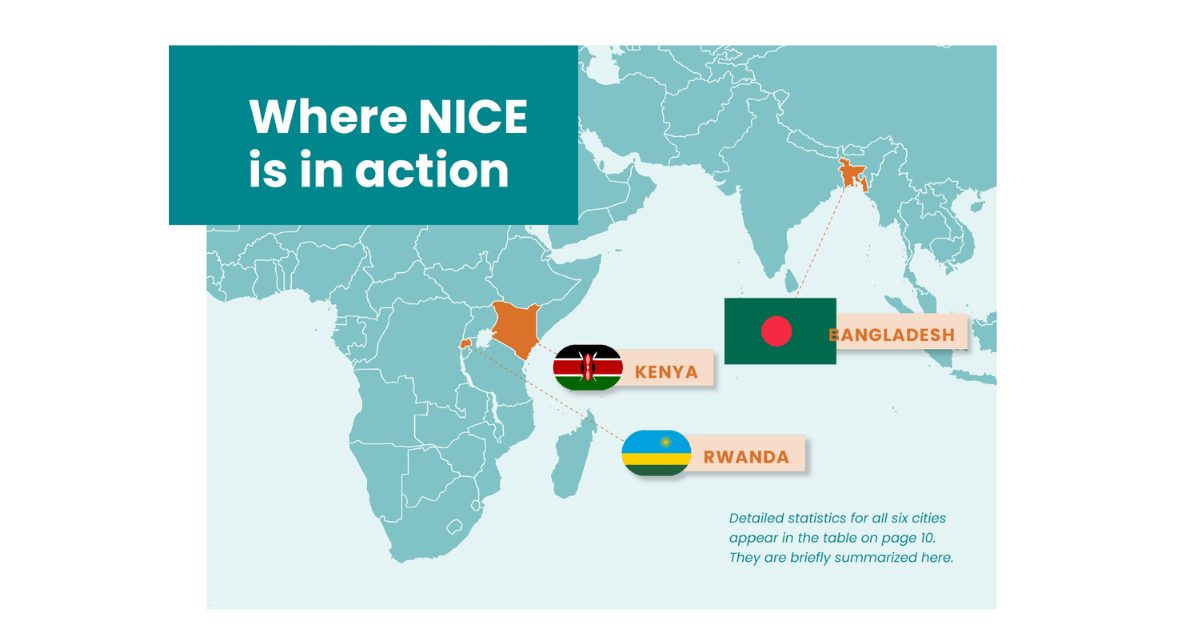
The Nutrition in City Ecosystems (NICE) project forms part of the ‘Thematic Section: Food Systems’ of the Swiss Agency for Development and Cooperation (SDC).NICE aims to improve nutrition and health, and to reduce poverty. It does so by increasing both the demand for, and supply of, nutritious foods produced using agroecological practices. NICE focuses on ‘secondary cities’, away from the capital. These cities are good examples of the urban areas that the UN predicts will grow fastest.
NICE works to realize three main visions: